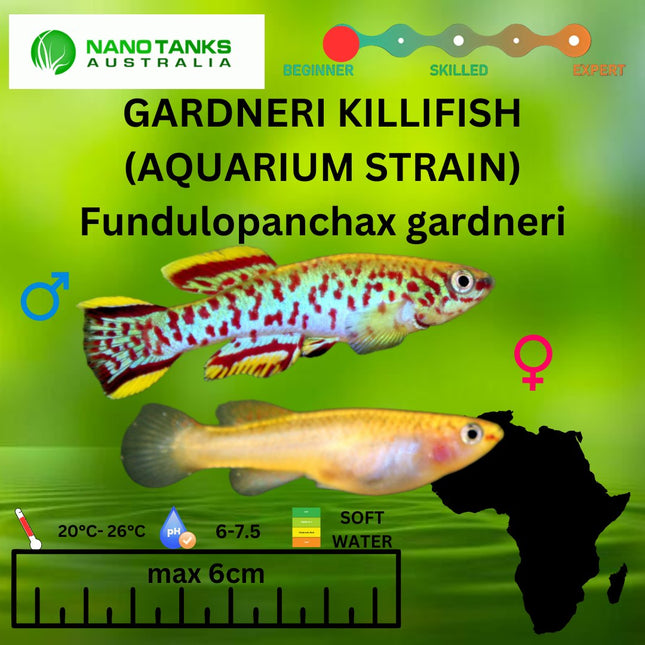
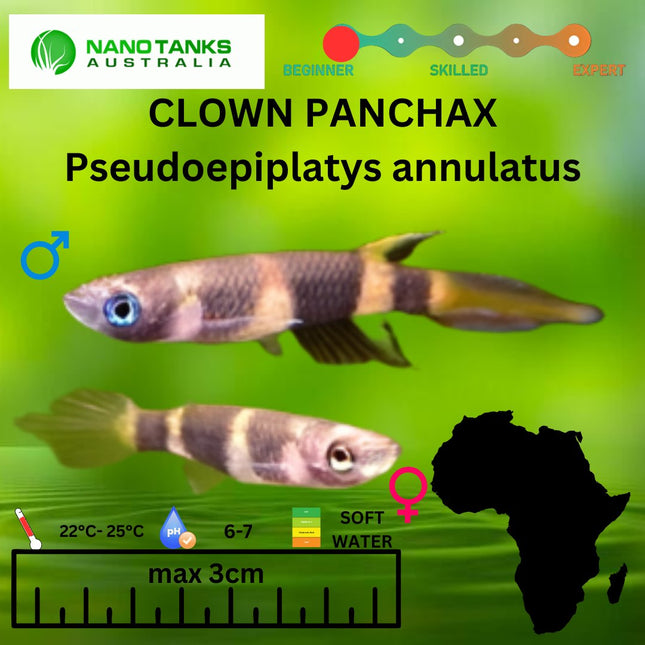
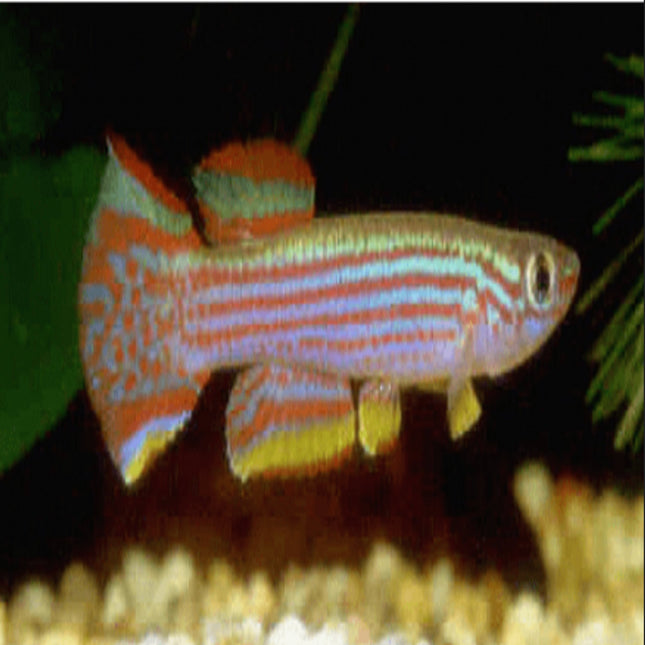
Check out our range of stock.
Didn't find what you like?
Send us a message
Found something out of stock?
Send us a message
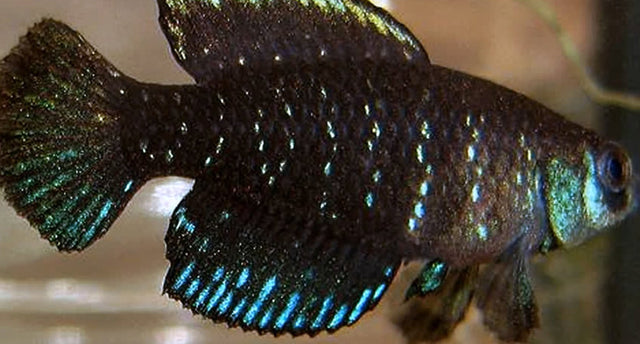
This Category is lumped together of all the species we normally get in Australia. We usually can have access to a variety of Killifish.
If we don't have any in stock we encourage you to send us a message.
Described By: (Boulenger), 1915 😊 Description Temperament Peaceful Predator Colour Form Varied Bright Colours. Males - Coloured Tails ♂️ Females - Plain Tails ♀️ Lifespan Roughly 5 years Diet 🥩 Carnivores - feeds on pellets, live foods and frozen foods. Minimum Tank Size 20 Litres Tank Setup Plants - Such as Duckweed, Anubias or Java Fern with many rocks and woods. Such as Dragon Stone, Dragon Wood, Quan Woods. Compatibility Peaceful - However due to the size please be aware that it can be eaten by bigger fish. To keep your Clown Killifish happy, their habitat should be well lit, water parameters excellent, and a gentle current from the filter set. If you give your clown Killies these conditions, they can live for 5 years! Rocket Killie Clown Killies are also known as rocket killies and banded panchax. Coming from western Africa, they are found in southern Guinea, Liberia, and Sierra Leone. The Clown Killifish is a peaceful micro-predator that feeds primarily on tiny flying insects and invertebrates. 😊 Can we expect some clowning around? Clown Killifish are shy (they are rather small) but they will become more playful when in a group, so expect some interesting schooling behaviour. They even enjoy jumping out of the water for some fun! Make sure to keep their tank lid tightly fitted so that these fish can have as much space as possible to live and play around without the risk of an excursion on the floor. 😊 A unique look Clown Killifish are also called Rocket Killies because they resemble tiny rockets. In addition, they have torpedo-shaped bodies that help them swim up for food, and they even appear as a fishy clown with round heads and spade-like tails. 😊 Keeping Clown Killifish in the Aquarium You can choose to house Clown Killies in larger community tanks that are already occupied by other species. The downside is the fish won't reproduce as often if they're placed with another type of inhabitant, so you should know what kind of goal you have for keeping these types of fishes before giving them a home. 😊 Are these fish easy to breed? If you have a male and female in your tank, don't worry about mating. Just maintain healthy water parameters to keep them alive, and they will breed when it's the right time every month! Clown Killies are prolific parents who can produce up to 25 fry per cycle - twice each month until their population numbers get out of hand! 😊 Feeding your Clown Killies Clown Killies are carnivores that need a lot of meaty protein, but they can only eat tiny portions. They lay in wait for the insects to land on the water's surface and then eat their prey - or what could be considered for them a tasty meat morsel! Ideally, in captivity, we can try mimicking what can be in the natural environment: baby brine shrimp 1-2 times a day should do it! There is advice on other foods on the internet but realistically, sticking with brine shrimp for a treat is good enough and achievable without spending a fortune. PLEASE CONTACT US FIRST BEFORE YOU ORDER ANY FEMALES AS WE WILL HAVE TO CHECK OUR STOCK!
$15.00
Distribution:Widely available from Equatorial Guinea (found in the lower Mitemele River drainage system), to northwestern Gabon (in the Mbei, Komo, Gabon, Abanga & lower Ogowe Rivers). An easy species to breed. Eggs are laid in top & bottom mops. Water incubation 13-15 days. Growth rate is quite rapid with sexual maturity being attained at about 4-5 months. Anthony Pinto in BKA Newsletter No.269 (January 1988) reported breeding them in water of 5 – 10 DH, pH 7, water temperature 24 – 26°C.Fry were fed newly hatched brine shrimp & microworm as a first food. Males were seen to start colouring up at 3 months.
$40.00