We have moved to 41 Croydon Ave Croydon NSW 2132. Contact us: 0433 784 171.
FREE COMBINED SHIPPING ABOVE $189* (DRY GOODS $20, LIVESTOCK $30)
Connect with us on WhatsApp for FREE Support

Check out our range of stock.

Didn't find what you like?

Send us a message

Found something out of stock?

Send us a message
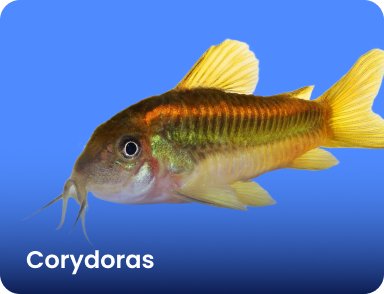
Corydoras Catfish - The Perfect Peaceful Bottom Dwellers

Corydoras - Nano Tanks Australia Aquarium Shop

Discover the Charming World of Corydoras Catfish!

Short Description:
Welcome to the wonderful world of Corydoras! These peaceful, personable catfish are among the most beloved aquarium inhabitants for good reason. Perfect for community tanks, these social bottom-dwellers combine adorable behavior, practical cleaning habits, and stunning patterns in one irresistible package.


Why Choose Corydoras?

  • ☮️ Peaceful Community Stars: Perfectly compatible with most fish, shrimp, and snails

  • 👨👩👧👦 Social Behavior: Thrive in groups of 6+ - watching them shoal is pure delight!

  • 🍃 Natural Clean-Up Crew: Expert at consuming leftover food and detritus

  • 🎨 Stunning Variety: From classic patterns to rare exotic varieties

  • 💪 Hardy & Adaptable: Great for beginners yet loved by experts


Shop By Experience Level

Beginner Favorites
Perfect for those new to Corydoras! These hardy species adapt well to various conditions.

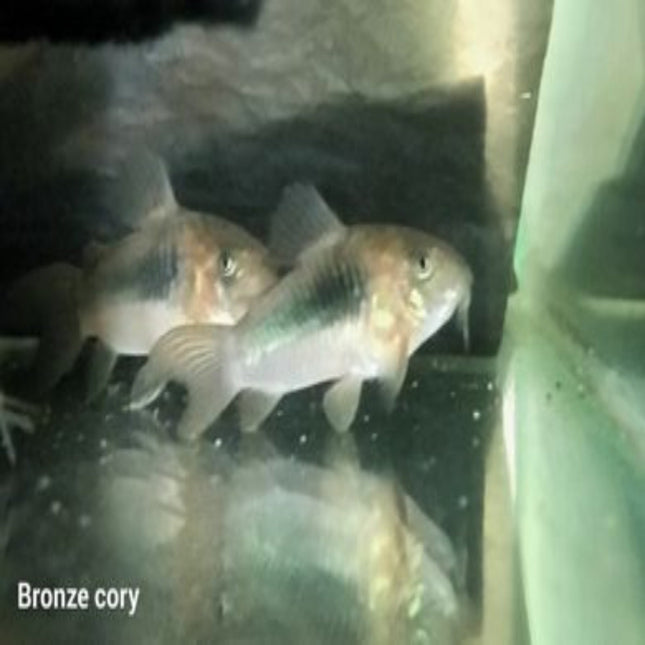
  • Bronze Corydoras (Corydoras aeneus)

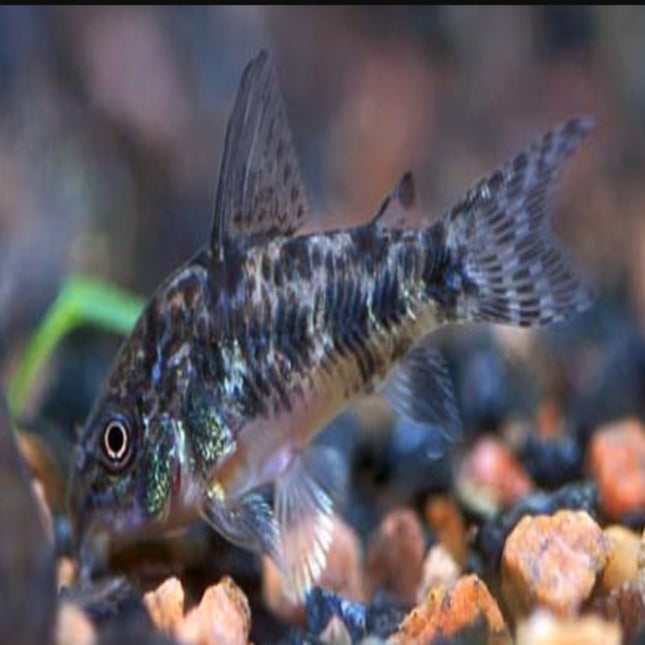
  • Pepper Corydoras (Corydoras paleatus)

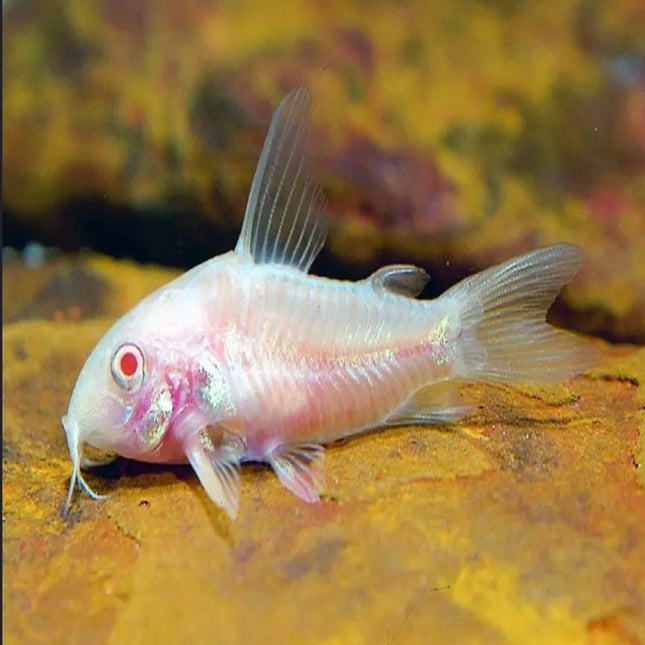
  • Albino Corydoras

  • Emerald Corydoras (Corydoras splendens)

Intermediate Choices
For those ready to explore more specialized species!

  • Panda Corydoras (Corydoras panda)

  • Juli Corydoras (Corydoras julii)

  • Skunk Corydoras (Corydoras arcuatus)

  • Three Stripe Corydoras (Corydoras trilineatus)

Advanced & Rare Varieties
For the dedicated Corydoras enthusiast!

  • Sterbai Corydoras (Corydoras sterbai)

  • Adolfoi Corydoras (Corydoras adolfoi)

  • Pygmy Corydoras (Corydoras pygmaeus)

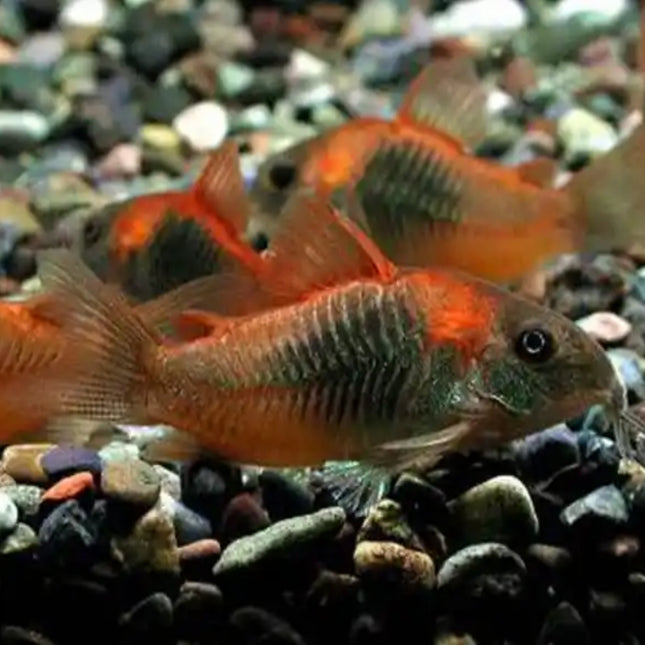
  • Venezuelan Orange Corydoras


Essential Corydoras Care Supplies

Set up your Corydoras for success with our complete selection:

  • Specialized Sinking Foods & Wafers

  • Smooth Sand Substrates

  • Driftwood & Hiding Places

  • Schooling Group Discounts

  • Water Conditioners & Medications


Corydoras Care Quick Guide


Parameter Ideal Range
Group Size 6+ individuals
Tank Size 20+ gallons
Temperature 72-78°F (22-26°C)
pH Range 6.0-7.8
Substrate Fine sand or smooth gravel
Diet Sinking pellets, wafers, frozen foods

Why They're Special

Corydoras aren't just fish - they're personalities! You'll love:

  • Their adorable "winking" behavior (actually gulping air!)

  • The way they constantly forage with their barbels

  • Their peaceful interactions with tank mates

  • The joy of watching a full group shoal together

  • Their reliability as indicator fish for water quality


Shop With Confidence

Our Promise:

  • 🚚 Live Arrival Guarantee

  • 👨👩👧👦 Healthy Social Groups

  • 💧 Properly Acclimated

  • 📞 Expert Support Available

  • 📦 Carefully Packaged

Shipping Note: We ship Corydoras in groups for their comfort and safety. Acclimation guide included with every order.


Join Thousands of Happy Cory Keepers!

"My Panda Corys are the stars of my community tank! They arrived healthy and were actively foraging within hours." - Jennifer R.

"Finally found a source for quality Sterbai Corys. Their orange fins light up my planted tank!" - Mark T.


Ready to Start Your Corydoras Colony?

Browse our collection to find your perfect matches. Whether you're starting your first group or adding to an existing shoal, we have the quality and variety to meet your needs.

Shop All Corydoras →
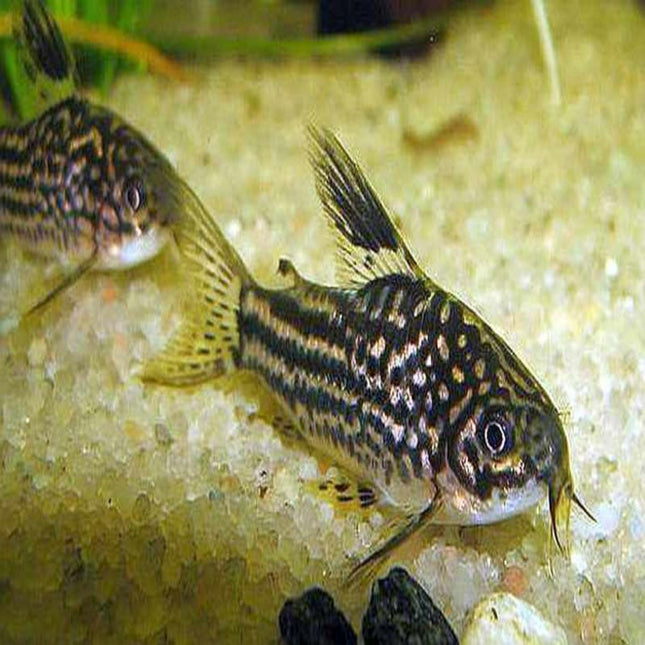
  • Elegant Corydoras (Corydoras elegans) - Nano Tanks Australia Aquarium Shop

    Elegant Corydoras (Corydoras elegans) 3cm

    46 in stock

    Corydoras elegans (Elegant Corydoras) Active, fast-moving cory that explores both bottom and mid-water levels Quick Facts Size: ~5–6 cm Tank size: 50L+ recommended Difficulty: 🟡 Moderate Temperament: Peaceful Best kept: Groups (5+) Plant safe: Yes Is this for you? ✔️ Good if: You want a more active and visible corydoras You enjoy schooling behaviour beyond just the bottom You have a peaceful, well-established tank You are happy to keep a proper group ❌ Avoid if: You want a strictly bottom-dwelling cory You prefer slow, sedentary fish You keep aggressive or fast-feeding fish You plan to keep them alone Why this fish? Corydoras elegans stands out from most cory species due to its higher activity level and tendency to swim through the water column. Instead of staying only on the substrate, they often move in small groups across mid-levels, making them more visible and engaging in the aquarium. Common mistakes Expecting typical “lazy bottom cory” behaviour Keeping them alone instead of in groups Underfeeding due to their active nature Keeping with aggressive or highly competitive fish Assuming they replace proper tank maintenance Care made simple Temperature: 22–26°C Diet: Sinking foods + occasional mid-water feeding Group size: 5+ recommended Substrate: Soft sand preferred Water: Clean, stable, well-oxygenated Pair with Sinking pellets and micro foods Fine sand substrate Plants and open swimming space Peaceful schooling fish NTA Insight: This species behaves more like a hybrid between a typical cory and a small schooling fish — giving you more movement across the entire tank, not just the bottom. FAQ Are they bottom dwellers? Yes, but not exclusively. They are more active swimmers and will often move into mid-water. Can I keep just one? No. They are social fish and should be kept in groups of at least 5. Do they clean the tank? No. They forage for food but still require proper feeding. Are they good for beginners? Suitable for beginners with an established tank, though slightly more active than typical corydoras. What do they eat? Sinking pellets, wafers, and small frozen foods. They may also feed mid-water occasionally.

    46 in stock

    $39.00

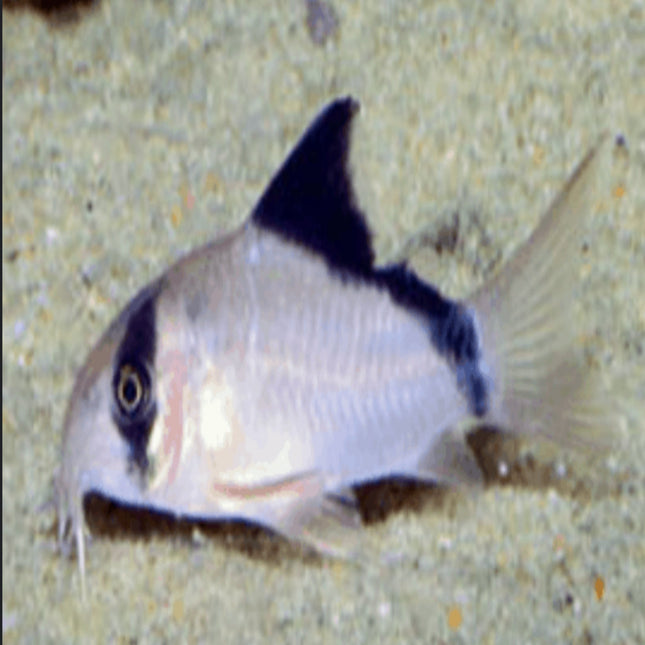
  • Corydoras Metae Bandit 3cm - Nano Tanks Australia Aquarium Shop

    [ARRIVED 1-MAY-2025] Corydoras Metae Bandit 3-4cm

    8 in stock

    Corydoras metae (Bandit Corydoras) Distinctive “mask” cory with peaceful behaviour for community aquariums Quick Facts Size: ~5–6 cm Tank size: 50L+ recommended Difficulty: 🟢 Easy–Moderate Temperament: Peaceful Best kept: Groups (5–6+) Plant safe: Yes Is this for you? ✔️ Good if: You want a visually distinctive Corydoras You have a peaceful, established aquarium You enjoy active bottom-level behaviour You’re happy to keep a proper group ❌ Avoid if: Your tank is newly set up or unstable You want a fish that survives on leftovers You plan to keep just one You keep aggressive or highly competitive fish Why this fish? Corydoras metae is commonly known as the “Bandit Cory” due to its dark stripe across the eyes, giving it a distinctive masked appearance. It combines strong visual appeal with classic Corydoras behaviour, making it a popular choice for peaceful community tanks. Common mistakes Adding them to immature tanks → higher stress and losses Keeping them alone instead of in groups Assuming they survive on leftover food Using sharp substrate → damages barbels Overcrowding the bottom of the tank Care made simple Temperature: 22–26°C Diet: Sinking pellets, wafers, frozen foods Group size: 5–6+ recommended Substrate: Soft sand preferred Water: Clean, stable, well-maintained Pair with Sinking cory pellets or wafers Fine sand substrate Driftwood and plants Peaceful tetra, rasbora, or nano fish NTA Insight: These are hardy but still benefit from stable water conditions. Most problems come from new tanks or inconsistent parameters, not the fish itself. FAQ Are Bandit Corydoras good for beginners? Yes, they are suitable for beginners with an established tank, but slightly less forgiving than the hardiest species. Can I keep just one? No. Corydoras are social fish and should be kept in groups of at least 5–6. Do they clean the tank? No. They forage along the bottom but still require proper feeding. Do they need sand? Soft sand is preferred to protect their barbels, though smooth substrate can also work. What do they eat? Sinking pellets, wafers, and frozen foods such as bloodworms or brine shrimp.

    8 in stock

    $30.00

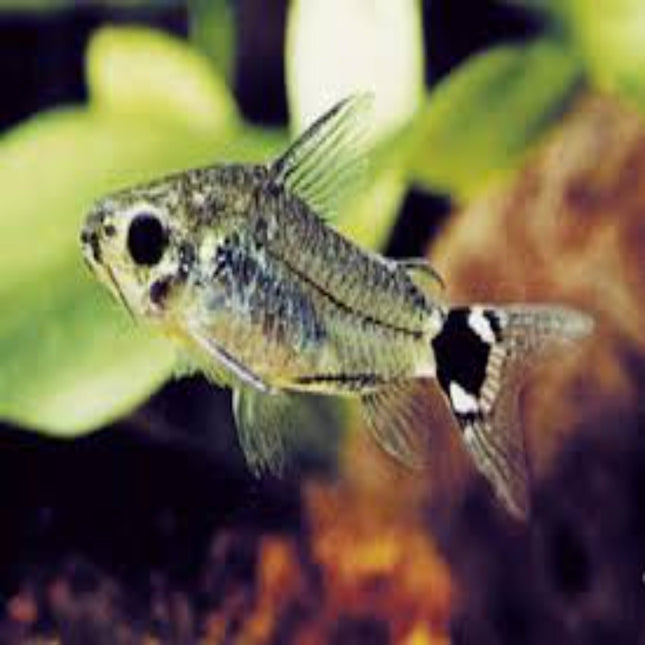
  • SUPER RARE: Corydoras Hastatus - Nano Tanks Australia Aquarium Shop

    [ARRIVED 10-JAN-2026] SUPER RARE: Corydoras Hastatus - The Dwarf Sedge Cory 1-2cm

    34 in stock

    Corydoras hastatus (Tail Spot Corydoras) Tiny schooling cory that spends most of its time in mid-water Quick Facts Size: ~2.5–3 cm Tank size: 20L+ recommended Difficulty: 🟡 Moderate Temperament: Peaceful Best kept: Groups (8–10+) Plant safe: Yes Is this for you? ✔️ Good if: You want a nano schooling fish with unique behaviour You enjoy mid-water activity in small tanks You have a peaceful planted aquarium You are happy to keep a larger group ❌ Avoid if: You want a traditional bottom-dwelling cory You plan to keep just a few You keep larger or aggressive fish You expect them to clean the tank Why this fish? Corydoras hastatus is one of the smallest corydoras species, known for its distinct tail spot and schooling behaviour. Unlike most corys, they spend much of their time swimming in the mid-water in tight groups, making them more like a nano schooling fish than a typical bottom-dweller. Common mistakes Keeping them in small groups → leads to stress and poor behaviour Expecting bottom-dwelling behaviour Keeping with larger fish that intimidate them Underfeeding due to their small size Assuming they replace tank maintenance Care made simple Temperature: 22–26°C Diet: Micro pellets, fine foods, small frozen foods Group size: 8–10+ recommended Substrate: Soft sand preferred Water: Clean, stable, well-maintained Pair with Micro pellets / fine foods Fine sand substrate Dense plants Small peaceful nano fish NTA Insight: This species behaves more like a nano schooling fish than a typical cory. The larger the group, the tighter and more natural their schooling behaviour becomes. FAQ Are they bottom dwellers? Not really. They spend a lot of time swimming mid-water and only occasionally rest on the substrate. How many should I keep? At least 8–10 is recommended. Larger groups show much better behaviour. Are they good for nano tanks? Yes, they are ideal for nano setups when kept in groups. Do they clean the tank? No. They still require proper feeding and care. What do they eat? Micro pellets, fine foods, and small frozen foods suitable for nano fish.

    34 in stock

    $30.00

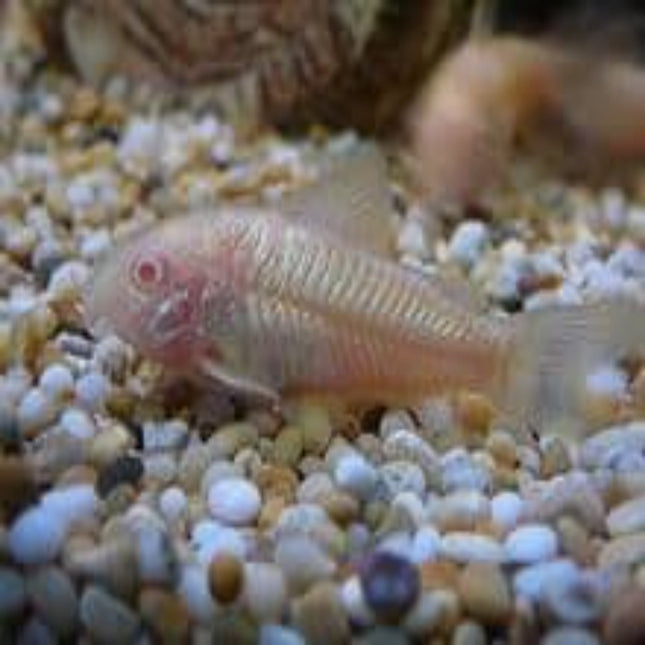
  • Corydoras Aenus Albino Bronze Corydoras - Nano Tanks Australia Aquarium Shop

    [ARRIVED 12-JUN-2025] Albino Bronze Corydoras (Corydoras Aenus) 3cm

    12 in stock

    Albino Bronze Corydoras (Corydoras aeneus) Hardy, peaceful bottom-dweller ideal for beginner and community aquariums Quick Facts Size: ~6–7 cm Tank size: 40L+ recommended Difficulty: 🟢 Easy Temperament: Peaceful Best kept: Groups (4–6+) Plant safe: Yes Is this for you? ✔️ Good if: You want a hardy, beginner-friendly fish You have a peaceful community aquarium You want constant bottom-level activity You are happy to keep a group ❌ Avoid if: You want a fish that survives on leftovers You plan to keep just one You use sharp or coarse gravel You keep aggressive or highly competitive fish Why this fish? Albino Bronze Corydoras is one of the most popular beginner catfish, known for its pale colour and bright red eyes. It offers hardy, peaceful behaviour and constant bottom-level movement, making it ideal for community aquariums. Common mistakes Keeping them alone instead of in groups Assuming they survive on leftover food Using sharp substrate → damages barbels Overcrowding the bottom of the tank Thinking they replace tank maintenance Care made simple Temperature: 22–26°C Diet: Sinking pellets, wafers, frozen foods Group size: 4–6+ recommended Substrate: Soft sand preferred Water: Clean and stable Pair with Sinking pellets / bottom feeder food Fine sand substrate Live plants Peaceful community fish NTA Insight: These are often sold as “starter fish”, but they do best when fed properly and kept in groups. Most issues come from underfeeding rather than difficulty. FAQ Are Albino Bronze Corydoras good for beginners? Yes. They are one of the most beginner-friendly catfish when kept in proper conditions. Can I keep just one? No. Corydoras are social fish and should be kept in groups of at least 4–6. Do they clean the tank? No. They help pick at leftover food but still require proper feeding. Do they need sand? Soft sand is preferred to protect their barbels, though smooth substrate can also work. What do they eat? Sinking pellets, wafers, and frozen foods such as bloodworms or brine shrimp.

    12 in stock

    $10.00

  • [ARRIVED 13 - JAN - 2026] Corydoras oiapoquensis 3 - 4cm - Nano Tanks Australia

    [ARRIVED 13-JAN-2026] Corydoras oiapoquensis 3-4cm

    20 in stock

    Corydoras oiapoquensis (Oiapoque Corydoras) Peaceful bottom-dweller for established community and nano tanks Quick Facts Size: ~5–6 cm Tank size: 40L+ recommended Difficulty: 🟢 Easy Temperament: Peaceful Best kept: Groups (4–6+) Plant safe: Yes Is this for you? ✔️ Good if: You want a peaceful bottom-dwelling fish for a community tank You have a planted or nano setup with soft substrate You are happy to keep a group of corydoras You want active but non-aggressive fish ❌ Avoid if: You want a “cleaner fish” that survives on leftovers You plan to keep them alone You use sharp gravel substrates You keep aggressive or highly competitive fish Why this fish? Corydoras oiapoquensis is a peaceful, active bottom-dweller that brings constant movement and natural behaviour to the lower levels of the tank. Like other Corydoras, they sift through the substrate for food, helping keep the tank active without disturbing plants or aquascaping. Common mistakes Keeping them alone instead of in a group Expecting them to survive on leftover food Using sharp gravel → damages barbels Overstocking the bottom of the tank Assuming they replace proper tank maintenance Care made simple Temperature: 22–26°C Diet: Sinking pellets, wafers, frozen foods Group size: 4–6+ recommended Substrate: Soft sand preferred Water: Clean and stable Pair with Sinking pellets / bottom feeder food Fine sand substrate Driftwood and plants Peaceful nano and community fish NTA Insight: Corydoras thrive when kept in groups and given proper food — most issues come from underfeeding and poor substrate choice, not the fish itself. FAQ Can I keep just one? No. Corydoras are social fish and should be kept in groups of at least 4–6. Do they clean the tank? No. They help pick up leftover food but still require proper feeding. Do they need sand? Soft sand is preferred to protect their barbels, though smooth substrate can also work. Are they good for beginners? Yes. They are hardy and peaceful, making them suitable for most community tanks. What do they eat? Sinking pellets, wafers, and frozen foods such as bloodworms or brine shrimp.

    20 in stock

    $49.00

  • Last stock! Corydoras Similis 3-4cm - Nano Tanks Australia Aquarium Shop

    [ARRIVED 13-JAN-2026] Corydoras Similis 3-4cm

    2 in stock

    Corydoras similis (Smudge Spot Corydoras) Subtle, elegant cory best suited to stable, established aquariums Quick Facts Size: ~5–6 cm Tank size: 50L+ recommended Difficulty: 🟡 Moderate Temperament: Peaceful Best kept: Groups (5+) Plant safe: Yes Is this for you? ✔️ Good if: You want a more refined or less common Corydoras You have an established, stable aquarium You keep peaceful community fish You are comfortable maintaining consistent water quality ❌ Avoid if: Your tank is newly set up You want a “set and forget” beginner fish You plan to keep just one You keep aggressive or fast-feeding fish Why this fish? Corydoras similis is appreciated for its clean body pattern and distinctive dark “smudge” marking near the dorsal area. It offers the same peaceful and social behaviour as other corydoras, but is better suited to stable environments where water quality is consistent. Common mistakes Adding to immature tanks → higher stress and losses Keeping them alone instead of in groups Underfeeding due to “bottom feeder” assumptions Keeping with aggressive or highly competitive fish Inconsistent water quality or sudden changes Care made simple Temperature: 22–26°C Diet: Sinking pellets, wafers, frozen foods Group size: 5+ recommended Substrate: Soft sand preferred Water: Clean, stable, well-maintained Pair with Sinking cory pellets or wafers Fine sand substrate Driftwood and plants Peaceful tetra, rasbora, or nano fish NTA Insight: This species does best when water conditions are stable and consistent. Most issues come from fluctuations or immature tanks rather than difficulty of care. FAQ Is Corydoras similis good for beginners? It can be kept by beginners with an established tank, but it is less forgiving than common corydoras like paleatus or aeneus. Can I keep just one? No. Corydoras are social fish and should be kept in groups of at least 5. Do they clean the tank? No. They forage along the bottom but still require proper feeding. Do they need sand? Soft sand is preferred to protect their barbels, though smooth substrate can also work. What do they eat? Sinking pellets, wafers, and frozen foods such as bloodworms or brine shrimp.

    2 in stock

    $20.00

  • Corydoras Paleatus Albino - Nano Tanks Australia Aquarium Shop

    [ARRIVED 21-AUG-2025] Corydoras Paleatus Albino 2-4cm

    37 in stock

    Corydoras Paleatus Albino is a popular freshwater fish that is commonly kept in aquariums. It belongs to the catfish family and is often referred to as the bronze corydoras or the peppered corydoras. This fish is known for its peaceful nature and is a great addition to any community tank. One of the standout features of the Corydoras Paleatus Albino is its unique appearance. It has a bronze-colored body with white stripes running along its sides. The Albino variant of this fish lacks the usual black spots on its body, making it even more eye-catching. It has a streamlined body shape that is designed for fast swimming, making it an active fish that adds a lively energy to any aquarium. The Corydoras Paleatus Albino is a small fish that typically grows up to 2-3 inches in length. They are generally hardy and easy to care for, making them ideal for beginner aquarists. These fish are best kept in groups of at least 6-8 individuals as they are social and thrive in the company of their own kind. They prefer a planted tank with plenty of hiding spots, as well as open swimming areas. In terms of water parameters, the Corydoras Paleatus Albino prefers a pH range of 6.0-8.0, with a temperature range of 72-78°F. They are adaptable to a variety of water conditions, but it is important to maintain stable water parameters to prevent stress and disease. Feeding the Corydoras Paleatus Albino is easy, as they are not picky eaters. They will readily accept a variety of foods, including flake, pellet, and frozen foods. It is important to offer a balanced diet that includes both protein and vegetables to ensure their optimal health. Overall, the Corydoras Paleatus Albino is a great addition to any aquarium. Their unique appearance, peaceful nature, and easy care make them a popular choice among aquarists. At Nano Tanks Australia Aquarium Shop, we take pride in offering high-quality fish that are individually photographed to ensure their premium quality. So why not consider adding the Albino Bronze Corydoras to your tank today?

    37 in stock

    $9.00

  • Corydoras Paleatus Long Fin/ Short Fin Pepper - Nano Tanks Australia Aquarium Shop

    [ARRIVED 21-AUG-2025] Corydoras Paleatus Long Fin/ Short Fin Pepper 2-4cm

    16 in stock

    Corydoras paleatus (Peppered Corydoras) Hardy, peaceful bottom-dweller ideal for beginner and community aquariums Quick Facts Size: ~6–7 cm Tank size: 40L+ recommended Difficulty: 🟢 Easy Temperament: Peaceful Best kept: Groups (4–6+) Plant safe: Yes Is this for you? ✔️ Good if: You want a hardy, beginner-friendly bottom fish You have a peaceful community aquarium You want active movement along the bottom You’re happy to keep a group ❌ Avoid if: You want a fish that survives on leftovers You plan to keep just one You use sharp gravel substrate You keep aggressive or highly competitive fish Why this fish? Corydoras paleatus, commonly known as the Peppered Cory, is one of the most reliable and beginner-friendly catfish available. Known for its mottled pattern and constant foraging behaviour, it brings life and movement to the lower levels of the aquarium without disturbing plants or other fish. Common mistakes Keeping them alone instead of in groups Assuming they survive on leftover food only Using sharp gravel → damages barbels Overcrowding the bottom of the tank Thinking they replace tank maintenance Care made simple Temperature: 20–26°C (tolerates cooler water well) Diet: Sinking pellets, wafers, frozen foods Group size: 4–6+ recommended Substrate: Soft sand preferred Water: Clean and stable Pair with Sinking pellets / bottom feeder food Fine sand substrate Live plants Peaceful community fish NTA Insight: These are often sold as “starter fish”, but they do best when treated as proper livestock — fed regularly and kept in groups. Most issues come from underfeeding, not difficulty. FAQ Are Peppered Corydoras good for beginners? Yes. They are one of the most beginner-friendly catfish when kept in proper conditions. Can I keep just one? No. Corydoras are social fish and should be kept in groups. Do they clean the tank? No. They help pick at leftover food but still require proper feeding. Do they need sand? Soft sand is preferred to protect their barbels, though smooth substrate can also work. Can they live in cooler water? Yes. They tolerate slightly cooler temperatures better than many tropical fish.

    16 in stock

    $15.00

  • Sale -32% Corydoras Adolfoi 4cm - Nano Tanks Australia Aquarium Shop

    [ARRIVED 24-MAR-2026] Corydoras Adolfoi 3-5cm

    10 in stock

    Corydoras adolfoi (Adolfo’s Corydoras) Premium-pattern cory best suited to stable, well-maintained aquariums Quick Facts Size: ~5–6 cm Tank size: 60L+ recommended Difficulty: 🟡 Moderate Temperament: Peaceful Best kept: Groups (5+) Plant safe: Yes Is this for you? ✔️ Good if: You want a standout Corydoras with clean, bold markings You have a stable, established aquarium You keep peaceful community fish You are comfortable maintaining water quality ❌ Avoid if: Your tank is newly set up or unstable You want a low-effort beginner fish You plan to keep just one You keep aggressive or highly competitive fish Why this fish? Corydoras adolfoi is known for its clean white body, bold black stripe, and striking orange marking near the dorsal area. It is often chosen as a feature cory due to its contrast and refined appearance, especially when kept in a group. Common mistakes Adding them to immature tanks → higher sensitivity Keeping them in small numbers instead of a group Assuming they behave like hardy beginner corys Underfeeding due to “bottom feeder” assumptions Keeping with aggressive or fast-feeding fish Care made simple Temperature: 22–26°C Diet: Sinking pellets, wafers, frozen foods Group size: 5+ recommended Substrate: Soft sand preferred Water: Clean, stable, well-maintained Pair with Sinking cory pellets or wafers Fine sand substrate Driftwood and plants Peaceful tetra, rasbora, or nano fish NTA Insight: These are often bought for their appearance, but they do best in stable, well-maintained tanks. Most issues come from treating them like beginner corydoras. FAQ Are Corydoras adolfoi good for beginners? Suitable for beginners with an established tank, but less forgiving than common species like paleatus or aeneus. Can I keep just one? No. Corydoras are social fish and should be kept in groups of at least 5. Do they clean the tank? No. They forage along the bottom but still require proper feeding. Do they need sand? Soft sand is preferred to protect their barbels, though smooth substrate can also work. What do they eat? Sinking pellets, wafers, and frozen foods such as bloodworms or brine shrimp.

    10 in stock

    $28.00 $19.00

  • Sale -34%Last stock! [LOCATED OFFSITE ARRIVED 23 - SEP - 2025] Red Laser Corydoras (Corydoras sp. CW014) 2 - 4cm - The Ultimate Collector's Cory - Nano Tanks Australia

    [ARRIVED 24-SEP-2025] Red Laser Corydoras (Corydoras sp. CW014) 2-4cm - The Ultimate Collector's Cory

    1 in stock

    Red Laser Corydoras (Corydoras sp. CW014) Striking laser-line cory for established, peaceful community tanks Quick Facts Size: ~5–6 cm Tank size: 60L+ recommended Difficulty: 🟡 Moderate Temperament: Peaceful Best kept: Groups (5+) Plant safe: Yes Is this for you? ✔️ Good if: You want a peaceful shoaling cory with standout colour You have an established tank with stable water quality You keep gentle community fish You are willing to keep them in a proper group ❌ Avoid if: You want a single “clean-up fish” Your tank is new or unstable You use sharp gravel You keep aggressive or highly competitive tank mates Why this fish? Red Laser Corydoras are loved for their bold metallic stripe and classic corydoras behaviour. They bring constant bottom-level activity to the aquarium while staying peaceful and community-safe. Like other laser-type corys, they are best appreciated in groups, where their colour and shoaling behaviour stand out far more naturally. Common mistakes Keeping them alone or in undersized groups Buying them as “tank cleaners” instead of proper fish to feed and care for Adding them to immature tanks Using coarse or sharp substrate that can damage barbels Keeping them with boisterous fish that outcompete them for food Care made simple Temperature: 22–26°C Diet: Sinking pellets, wafers, small frozen foods Group size: 5+ recommended Substrate: Soft sand or smooth substrate preferred Water: Clean, stable, well-maintained Pair with Sinking cory pellets or wafers Fine sand substrate Driftwood and shaded areas Peaceful tetra, rasbora, or other gentle community fish NTA Insight: These do best when treated like a proper shoaling species, not an afterthought for leftover food. A stable tank, soft substrate, and deliberate feeding make a big difference. FAQ Are Red Laser Corydoras good for beginners? They are manageable for beginners with an established tank, but they are not ideal for brand-new setups. Can I keep just one or two? Not recommended. They are social fish and do better in groups of at least 5. Do they clean the tank? No. They will forage along the bottom, but they still need proper feeding and do not replace tank maintenance. Do they need sand? Soft sand is preferred, though smooth substrate can also work. Sharp gravel is best avoided. Why are they called CW014? CW numbers are hobby reference codes used for undescribed Corydoradinae forms. In the laser group, names and codes can overlap or be disputed, so the hobby naming is not always perfectly clean.

    1 in stock

    $150.00 $99.00

  • Corydoras trilineatus Three stripe Corydoras - Nano Tanks Australia Aquarium Shop

    [ARRIVED 26-MAR-2026] Corydoras trilineatus Three stripe Corydoras 3-5cm

    50 in stock

    Corydoras trilineatus (False Julii Corydoras) Hardy, patterned cory with classic behaviour for community aquariums Quick Facts Size: ~5–6 cm Tank size: 50L+ recommended Difficulty: 🟢 Easy Temperament: Peaceful Best kept: Groups (5–6+) Plant safe: Yes Is this for you? ✔️ Good if: You want a hardy, beginner-friendly Corydoras You like detailed, patterned fish You have a peaceful community tank You’re happy to keep a proper group ❌ Avoid if: You want a fish that survives on leftovers You plan to keep just one You use sharp gravel substrate You keep aggressive or highly competitive fish Why this fish? Corydoras trilineatus is a popular patterned cory known for its maze-like markings across the body. It is often mistaken for the rarer Corydoras julii, but offers the same peaceful behaviour and ease of care, making it a great choice for community tanks. Common mistakes Confusing it with Corydoras julii (this is more commonly available) Keeping them alone instead of in groups Assuming they survive on leftover food Using sharp substrate → damages barbels Overstocking the bottom of the tank Care made simple Temperature: 22–26°C Diet: Sinking pellets, wafers, frozen foods Group size: 5–6+ recommended Substrate: Soft sand preferred Water: Clean and stable Pair with Sinking pellets / bottom feeder food Fine sand substrate Driftwood and plants Peaceful community fish NTA Insight: Most fish sold as “Julii Cory” are actually Corydoras trilineatus. The care is the same — focus on group size, proper feeding, and stable conditions. FAQ Is this the same as Julii Corydoras? Not exactly. Corydoras trilineatus is often sold as “Julii Cory”, but true julii are less common in the hobby. Are they good for beginners? Yes. They are hardy and suitable for beginners with a properly set up tank. Can I keep just one? No. Corydoras are social fish and should be kept in groups of at least 5–6. Do they clean the tank? No. They forage for food but still require proper feeding. Do they need sand? Soft sand is preferred to protect their barbels, though smooth substrate can also work.

    50 in stock

    $15.00

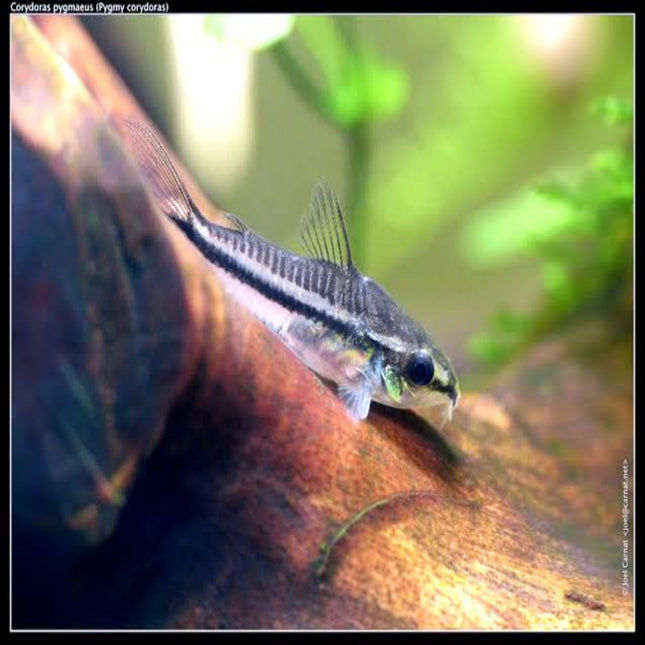
  • Sale -25% Corydoras Pygmaeus Pygmy - Nano Tanks Australia Aquarium Shop

    [ARRIVED 26-MAR-2026] Corydoras Pygmaeus Pygmy 1-2cm

    1 review

    63 in stock

    Corydoras pygmaeus (Pygmy Corydoras) Tiny, schooling cory that moves between bottom and mid-water in nano tanks Quick Facts Size: ~2–3 cm Tank size: 20L+ recommended Difficulty: 🟢 Easy Temperament: Peaceful Best kept: Groups (6–10+) Plant safe: Yes Is this for you? ✔️ Good if: You want a nano-friendly schooling fish You enjoy active movement across the whole tank You have a peaceful planted aquarium You are happy to keep a larger group ❌ Avoid if: You want a strictly bottom-dwelling cory You plan to keep just a few (too small group) You keep large or aggressive fish You expect them to clean the tank Why this fish? Corydoras pygmaeus is one of the smallest corydoras species, making it ideal for nano aquariums. Unlike most corys, they regularly swim in the mid-water as a group, giving you both bottom activity and schooling behaviour in one fish. Common mistakes Keeping too few → they need larger groups (6–10+) Expecting them to stay only on the bottom Keeping with larger fish that intimidate or outcompete them Underfeeding due to small size Assuming they replace tank maintenance Care made simple Temperature: 22–26°C Diet: Fine sinking foods, micro pellets, frozen foods Group size: 6–10+ recommended Substrate: Soft sand preferred Water: Clean and stable Pair with Micro pellets / fine sinking food Fine sand substrate Dense plants Small peaceful nano fish NTA Insight: These are best treated as a nano schooling fish, not just a bottom cleaner. The larger the group, the more natural and active their behaviour becomes. FAQ Are they bottom dwellers? Not exclusively. They spend time both on the bottom and swimming mid-water in groups. How many should I keep? At least 6, but 8–10+ is strongly recommended for natural behaviour. Are they good for nano tanks? Yes. They are one of the best corydoras species for nano setups. Do they clean the tank? No. They still require proper feeding and care. What do they eat? Fine sinking foods, micro pellets, and small frozen foods.

    63 in stock

    $14.95 $11.20

  • Corydoras Venezuela 3-3.5cm - Nano Tanks Australia Aquarium Shop

    [ARRIVED 7-MAR-2026] Corydoras Venezuela 3-4cm

    31 in stock

    Corydoras “Venezuela” (Orange / Black Corydoras) Colourful, hardy Corydoras variant for established community aquariums Quick Facts Size: ~5–6 cm Tank size: 50L+ recommended Difficulty: 🟢 Easy–Moderate Temperament: Peaceful Best kept: Groups (5–6+) Plant safe: Yes Is this for you? ✔️ Good if: You want a colourful alternative to standard bronze corydoras You have a peaceful community aquarium You want active bottom-level movement You are happy to keep a proper group ❌ Avoid if: You want a fish that survives on leftovers You plan to keep just one You use sharp gravel substrate You keep aggressive or highly competitive fish Why this fish? “Venezuela” Corydoras are a colourful variation of the classic corydoras group, known for their orange, bronze, or deep dark coloration depending on the variant. They offer the same hardy and peaceful nature as standard corys, but with stronger visual impact and presence in the aquarium. Common mistakes Keeping them alone instead of in groups Assuming they survive on leftover food Using sharp substrate → damages barbels Overstocking the bottom of the tank Buying based on colour but ignoring care requirements Care made simple Temperature: 22–26°C Diet: Sinking pellets, wafers, frozen foods Group size: 5–6+ recommended Substrate: Soft sand preferred Water: Clean, stable, well-maintained Pair with Sinking cory pellets or wafers Fine sand substrate Driftwood and plants Peaceful community fish NTA Insight: “Venezuela” corydoras are often bought for their colour, but they behave exactly like standard corys — they need groups, proper feeding, and stable conditions to thrive. FAQ Is this a different species from Bronze Corydoras? In most cases, “Venezuela” refers to a colour variant of Corydoras aeneus rather than a completely different species. Can I keep just one? No. Corydoras are social fish and should be kept in groups of at least 5–6. Do they clean the tank? No. They forage for food but still require proper feeding. What is the difference between orange and black variants? The difference is mainly colour. Care, behaviour, and requirements are essentially the same. Are they good for beginners? Yes. They are hardy and suitable for beginners with a properly set up tank.

    31 in stock

    $15.00

  • Last stock! Gold Laser Corydoras CW10 3cm - Nano Tanks Australia Aquarium Shop

    [ARRIVED 9-MAR-2025] Gold Laser Corydoras CW10 3-5cm

    5 in stock

    Gold Laser Corydoras (Corydoras sp. CW010) Bright gold-stripe cory with strong group behaviour for established aquariums Quick Facts Size: ~5–6 cm Tank size: 60L+ recommended Difficulty: 🟡 Moderate Temperament: Peaceful Best kept: Groups (5+) Plant safe: Yes Is this for you? ✔️ Good if: You want a standout Corydoras with strong visual appeal You have a stable, established tank You enjoy keeping fish in proper groups You keep peaceful community species ❌ Avoid if: Your tank is newly set up or unstable You want a single “feature fish” You expect them to clean your tank You keep aggressive or highly competitive fish Why this fish? Gold Laser Corydoras are known for their striking metallic gold stripe that runs along the body, making them one of the most eye-catching Corydoras available. When kept in groups, they display natural schooling behaviour and become far more active and visually impressive. Common mistakes Keeping them in small numbers instead of a group Buying them for appearance but not meeting care requirements Adding to unstable tanks → higher stress and losses Using sharp substrate → damages barbels Underfeeding due to “bottom feeder” assumptions Care made simple Temperature: 22–26°C Diet: Sinking pellets, wafers, frozen foods Group size: 5+ recommended Substrate: Soft sand preferred Water: Clean, stable, well-maintained Pair with Sinking cory pellets or wafers Fine sand substrate Driftwood and plants Peaceful tetra, rasbora, or nano fish NTA Insight: These look best and behave naturally when kept in proper groups. Most issues come from keeping too few or adding them to unstable tanks. FAQ Are Gold Laser Corydoras beginner-friendly? Suitable for beginners with an established tank, but not ideal for brand-new setups. Can I keep just one or two? Not recommended. They are social fish and should be kept in groups of at least 5. Do they clean the tank? No. They forage along the bottom but still require proper feeding. Do they need sand? Soft sand is preferred to protect their barbels, though smooth substrate can also work. Why are they called CW010? CW numbers are hobby codes used to identify Corydoras that are not formally described species.

    5 in stock

    $40.00

  • Corydoras Sterbai 3cm - Nano Tanks Australia Aquarium Shop

    [ARRIVING 26-MAR-2026] Corydoras Sterbai 2-4cm

    44 in stock

    Corydoras sterbai (Sterbai Corydoras) Striking spotted cory that handles warmer community aquariums Quick Facts Size: ~6–7 cm Tank size: 60L+ recommended Difficulty: 🟡 Moderate Temperament: Peaceful Best kept: Groups (5–6+) Plant safe: Yes Is this for you? ✔️ Good if: You run a slightly warmer tank (e.g. with tetras, discus-type setups) You want a standout Corydoras with strong pattern You have a stable, established aquarium You keep peaceful community fish ❌ Avoid if: Your tank is newly set up or unstable You want a low-effort beginner fish You plan to keep just one You keep aggressive or highly competitive fish Why this fish? Corydoras sterbai is one of the most recognisable corydoras species, known for its white spotted pattern and contrasting orange fins. It is especially popular because it tolerates warmer water better than most corys, making it suitable for a wider range of community setups. Common mistakes Adding them to immature tanks → higher sensitivity Keeping them alone instead of in groups Assuming they survive on leftover food Using sharp substrate → damages barbels Underfeeding due to “bottom feeder” assumptions Care made simple Temperature: 24–28°C (handles warmer water well) Diet: Sinking pellets, wafers, frozen foods Group size: 5–6+ recommended Substrate: Soft sand preferred Water: Clean, stable, well-maintained Pair with Sinking cory pellets or wafers Fine sand substrate Driftwood and plants Warm-water peaceful community fish NTA Insight: One of the few Corydoras that comfortably handles warmer temperatures. Most issues come from poor tank stability and underfeeding rather than temperature itself. FAQ Are Sterbai Corydoras good for beginners? Suitable for beginners with an established tank, but not ideal for brand-new setups. Can they live in warmer tanks? Yes. They tolerate warmer water better than most Corydoras species. Can I keep just one? No. Corydoras are social fish and should be kept in groups of at least 5–6. Do they clean the tank? No. They forage along the bottom but still require proper feeding. Do they need sand? Soft sand is preferred to protect their barbels, though smooth substrate can also work.

    44 in stock

    $19.00

15 products

© 2026 Nano Tanks Australia, Powered by Shopify

    • American Express
    • Apple Pay
    • Google Pay
    • Mastercard
    • PayPal
    • Shop Pay
    • Visa

    Login

    Forgot your password?

    Don't have an account yet?
    Create account